Wednesday, March 23, 2022

In ACA marketplace in 2022, too much underinsurance (bronze plan selection) at low incomes

Subscribe to xpostfactoid 


We have had plenty of time to celebrate the 21% surge in ACA marketplace enrollment, most likely triggered primarily by the major boosts to premium subsidies provided last March by the American Rescue Plan Act (ARPA). Now, with CMS's Public Use Files tracking marketplace enrollment for 2022 released on the ACA's 12th anniversary, it's time for some disappointment.  

In the 33 HealthCare.gov states, for which CMS provides detailed plan selection breakouts, the ARPA subsidy boosts did not reduce underinsurance as much as might have been expected during the Open Enrollment Period (OEP) for 2022.  That is, silver plan selection at low incomes (up to 200% FPL), where Cost Sharing Reduction (CSR) makes silver plans far and away the best value for almost all enrollees, modestly reversed a four-year slide, but not nearly as much as might have been expected. 

In HealthCare.gov states this year, 60% of enrollees had incomes below 200% FPL, and 80% of them selected silver plans. 

Enrollment by metal level at low incomes

HealthCare.gov states

100-150% FPL

Year

% bronze

% silver

2017

  9.2%

89.3%

2018

  9.9%

87.7%

2019

10.4%

88.3%

2020

12.1%

86.8%

2021

16.2%

82.7%

SEP 2021(0-150%)


93.0% (estimate)

2022

14.1%

84.9%

Tuesday, March 22, 2022

Good news alert: Web search for health insurance has been cleaned up

Subscribe (free) to xpostfactoid


ACA marketplace enrollment surged by 21% in 2022, from 12.0 million as of the end of the Open Enrollment Period for 2021 to 14.5 million in OEP 2022.  The primary cause was plainly the massive boosts to premium subsidies provided by the American Rescue Plan in March 2021 (witness the enrollment surge in the emergency Special Enrollment Period in effect when the boosted subsidies came into effect). Ramped-up federally funded enrollment assistance and advertising may also have helped.

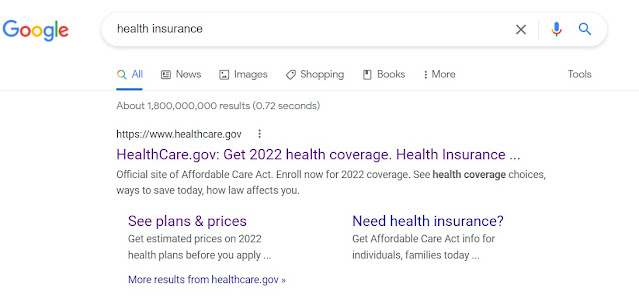
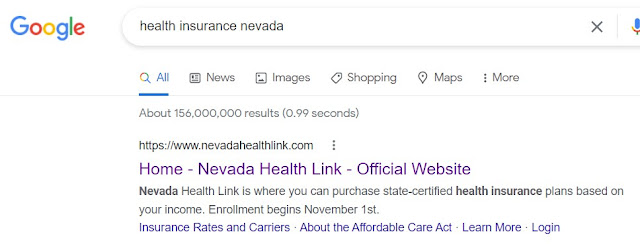
A less visible marketing measure may also have been a factor: the online search environment has been cleaned up.  Search today on Google for "health insurance" or "Obamacare" and HealthCare.gov, the federal exchange that serves 33 states, will top the search results. Search for "health insurance Nevada" and Nevada Health Link, the state-run ACA exchange, will be on top. The same is true for all of the 17 states (and D.C.) that run their own exchanges. There are some slight variations on Yahoo and Bing, but results there are also generally reliable. 


Saturday, March 12, 2022

Not your older sister's marketplace: Web awards for the ACA exchanges

Subscribe (free) to xpostfactoid

Whatever you think of the ACA marketplace as a means of providing health insurance to those who lack access to other sources, the exchanges themselves, viewed as online enrollment and information portals, have come a long way in recent years, with a few exceptions.*

Since 2020, six states  -- Pennsylvania, New Jersey, Nevada, Maine, New Mexico and Kentucky -- have left HealthCare.gov, the federal exchange now used by 33 states, and launched new state-based exchanges -- or, in the case of Kentucky, revived an SBE that had been killed by a Republican governor. All work pretty well with the exception of Kentucky's KyNect, which has some bugs to work out as it attempts to serve as a portal for multiple government benefits. 

Three of the new exchanges-- in PA, NJ and NV -- were designed by the tech vendor GetInsured, and are similar in many respects, notably a pretty user-friendly shop and compare tool that manages to display the handful of questions you need to answer to get price estimates on one page. GetInsured also designed exchanges for California and Idaho and revamped the shopping tool for Minnesota and Washington. In the pre-application plan preview stage, these exchanges all have a similar look and feel, both in the shop-and-compare question phase and in the display of available plans -- with the exception of Washington, which retains an archaic and confusing design in the latter. 

Saturday, March 05, 2022

Did ARPA increase CSR takeup and so reduce underinsurance? A view from Covered California

Ever since the American Rescue Plan Act's boosts to premium subsidies in the ACA marketplace came online last March (and even before), a chief interest of mine has been whether the enhanced subsidies will reduce underinsurance as well as boosting enrollment (and so reducing uninsurance). 

The chief source of reductions in underinsurance would be improved takeup of silver plans with Cost Sharing Reduction (CSR) at incomes up to 200% FPL* ($25,760 for a solo enrollee). CSR is available only with silver plans. As boosted by ARPA,  a benchmark (second cheapest) silver plan is now free at incomes up to 150% FPL and costs 0-2% of income at 150-200% FPL. At 200% FPL, benchmark silver used to cost about $135 per month for a single person; it now tops out at $43/month. More than half of ACA marketplace enrollees have income below 200% FPL.

As noted in this post, silver plan selection among low-income enrollees had been sliding since 2017, but  ARPA did apparently reverse the trend during the emergency Special Enrollment Period that ran from Feb. 15 to Aug. 15 last year in HealthCare.gov states, and for varying periods in the 18 state-based exchanges.  Below, we'll get a point of comparison from California.

Wednesday, March 02, 2022

A clarification re year-round marketplace enrollment at incomes below 150% FPL

Subscribe (free) to xpostfactoid


This is an update concerning the new "monthly Special Enrollment Period" -- effectively, year-round enrollment - -that CMS has implemented on HealthCare.gov for applicants with incomes below 150% FPL (currently $19,140 for an individual, $32,580 for a family of four).* 

In a prior post about the monthly SEP, I emphasized that the vast majority  (88%) of enrollees with incomes below the 150% FPL threshold are in states that have refused to enact the ACA Medicaid expansion, and that one effect may be to reduce the "coverage gap" in those states -- that is, the lack of subsidized coverage available to adults with incomes below 100% FPL, the minimum threshold for marketplace subsidy eligibility. During the pandemic, marketplace enrollment has increased by leaps and bounds in nonexpansion states -- it's up 45% in two years -- and half the enrolment in those states is at incomes below 150% FPL. Noting that subsidy eligibility is based on an applicant's estimate of future income, and that income is notoriously difficult to predict for low earners, I outlined a regulatory question posed by the rule establishing the monthly SEP:

Monday, February 28, 2022

Whither the off-exchange individual market? Tea leaves in New Jersey

Subscribe (free) to xpostfactoid

Jersey City skyline

One open question created by the American Rescue Plan Act's boost to ACA marketplace subsidies is the extent to which off-exchange enrollment in ACA-compliant plans has migrated to the exchanges. A related question is how many people who would have been ineligible for subsidies and uninsured pre-ARPA (or insured in noncompliant plans) were drawn into the exchanges.

New Jersey, one of the few states that tracks off-exchange enrollment on a quarterly basis and has a large off-exchange enrollment cohort, will eventually provide an interesting sampling. Unfortunately, the off-exchange tally is at present only complete through Q4 2020. But the state's on-exchange enrollment reports provide some hints, explored below. 

Wednesday, February 23, 2022

New Jersey launches year-round marketplace enrollment at incomes below 200% FPL

Subscribe (free) to xpostfactoid


My last post delved into CMS's motives and goals in establishing continuous year-round enrollment for ACA marketplace enrollees with income up to 150% FPL, as long as benchmark silver coverage remains free to that income level.

New Jersey has gone the feds one better, today announcing year-round enrollment on GetCoveredNJ, the state exchange, for enrollees with income up to 200% FPL ($25,760 annually for an individual; $53,000 for a family of four). 

Various state-specific conditions suggest motives for going that high:

1. Supplemental state subsidies provided in New Jersey make silver coverage free all the way to the 200% FPL threshold. In finalizing its rule establishing continuous enrollment to 150% FPL, CMS suggested (pp. 91-92 here) that limiting the open enrollment to those for whom benchmark coverage is free limits the risk of adverse selection. For that reason, CMS conditions extending the continuous SEP beyond this year on extension of the enhanced subsidies provided through 2022 by the American Rescue Plan.

2. New Jersey is one of a handful of states that imposed a state-level individual mandate after the Republican Congress zeroed out the penalty for the federal mandate. There has been a degree of buyer's remorse about the mandate among progressive groups. It was enacted in 2018 to partly fund a state reinsurance program (about two thirds-funded by the federal government), which reduced premiums for unsubsidized (i.e., mostly affluent) enrollees. Most people who pay the mandate penalty are low income. Continuous enrollment, along with the targeting of uninsured taxpayers described below, would reduce low-income exposure to the mandate.

Sunday, February 20, 2022

Why HealthCare.gov is offering year-round enrollment at low incomes


CMS has soft-launched a new "monthly special enrollment period" (SEP) for health insurance seekers with incomes below 150% of the Federal Poverty Level in states that use the federal exchange, HealthCare.gov. This new rule, finalized last fall, effectively creates continuous enrollment for the lowest-income enrollees. At present, the SEP can be accessed by calling the HealthCare.gov help center (1-800-318-2596); it will be available online on HealthCare.gov by late March. State-based exchanges can implement this continuous enrollment at their option. 

Louise Norris covers every nuance of the rule's operation here. I will focus on CMS's stated motives and goals, and the likely impact.

The rule stipulates that the monthly SEP will only be operative as long as benchmark silver coverage remains free to enrollees with income up to the 150% FPL threshold. Boosts to ACA marketplace subsidies provided by the American Rescue Plan Act (ARPA) created that free coverage through 2022. While Democrats clearly intended and have been expected to extend the ARPA subsidies beyond this year, that is no longer certain now that the Build Back Better legislation has stalled.

Continuous enrollment in coverage available free at low incomes is of a piece with Medicaid enrollment practices, as well as with enrollment in the Basic Health Programs established under the ACA by Minnesota and New York. BHPs offer free or low-premium coverage with low-out-of-pocket costs -- rather like Medicaid -- to residents with incomes up to 200% FPL. 

In its September 27, 2021 update to ACA rules, CMS spelled out the rationale for the new monthly low-income SEP. The broad context, cited in the executive summary, is President Biden's January 28, 2021 Executive Order 14009, “Strengthening Medicaid and the Affordable Care Act," which declares:

millions of people who are potentially eligible for coverage under the ACA or other laws remain uninsured, and obtaining insurance benefits is more difficult than necessary. For these reasons, it is the policy of my Administration to protect and strengthen Medicaid and the ACA and to make high-quality healthcare accessible and affordable for every American. 

Monday, February 14, 2022

Flowers in the graveyard: Health Policy Valentines 2022

Subscribe to xpostfactoid

U.S. healthcare policy is no rose garden, but this year's HealthPolicyValentines salute a few sweet blossoms. That's notwithstanding the staggering failures of policy -- in many cases malevolent and corrupt -- that have swelled the pandemic death toll to an unfathomable 900,000.

         *     *     *

I'm in love with a cold hard fact:
We've enacted the No Surprises Act.

         *     *     *

Affordable Care?
Yes, we can!
Thanks to the American
Rescue Plan.

A massive boost to subsidies meant
enrollment up twenty-one percent.

Wednesday, February 09, 2022

In New Mexico, a Midas touch has a double edge

Subscribe to (free) xpostfactoid

Let's take one more look at enrollment results in New Mexico's ACA marketplace, where extreme silver loading rendered average lowest-cost gold plan premiums 14% lower than those of lowest-cost silver plans, and gold plans were available well below the cost of a benchmark silver plan statewide (excepting those for whom silver plans also were free, or had single-digit premiums).

The unadulterated good news was for enrollees with incomes above 200% of the Federal Poverty Level, more than two thirds of whom chose gold plans, while only about 13% choose bronze. That's a real advance.

The good news at incomes below 200% FPL was that just 4% chose bronze plans, which carry deductibles usually in the $7,000 range for an individual.  Most of those who selected bronze at low income levels may have been subsidy-ineligible, usually because of an employer's offer of insurance. That's generally the case for a small percentage of enrollees with incomes in subsidy range.

The not-so-good news is that 31% of enrollees with incomes in the 138-200% FPL range chose gold plans, although silver plans have a higher actuarial value than gold plans at incomes below 200% FPL, reflected most dramatically in annual maximum out-of-pocket cost (MOOP) caps that can't go higher than $2,900, vs. a maximum allowable MOOP of $8,700 for gold plans. 

Friday, February 04, 2022

In 2022, New Mexicans grabbed the gold in the ACA marketplace

Back in mid-October, I devoted a handful of posts (1, 2, 3) to New Mexico's great ACA marketplace experiment: instructing insurers to price silver plans as platinum-value in 2022 -- that is, as if no one with an income over 200% FPL would buy a silver plan. Below that income threshold, silver plans, enhanced by strong Cost Sharing Reduction (CSR), actually are platinum-equivalent, having an actuarial value of 94% (at incomes up to 150% FPL) or 87% at 150-200% FPL). The instructions were adhered to: throughout the state gold plans offered for 2022 were priced well below the benchmark silver plan.

The results were largely as planned, and can fairly be deemed a success. At incomes over 200% FPL, two thirds of enrollees chose gold plans, compared to 35% last year. At incomes in the 138-200% FPL range, comprising most enrollees eligible for strong CSR,  65% of enrollees chose silver plans -- and just 4% chose bronze, generally a bad choice for low income people, with single-person deductibles averaging about $7,000.  Among all enrollees, 57% chose gold plans.

Enrollment was up modestly, from 42,984 in Open Enrollment 2021 to 45,973 this year, a 7% increase. That's below the 11.5% average increase this year for states that have expanded Medicaid, as New Mexico has. But New Mexico launched a new state-based exchange, bewellnm, in the Open Enrollment Period for 2022, and that transition has often triggered enrollment losses for other states.

Here are the metal level choices broken out by income (courtesy of bewellnm, at the first link above):

Thursday, January 27, 2022

ACA marketplace enrollment up 45% in two years in nonexpansion states

The final snapshot for the Open Enrollment Period on HealthCare.gov and ten state-based exchanges is in. We're almost done, though eight SBEs are still open. Already, enrollment in marketplace plans is up 21% over OEP 2021, to a record-breaking 14.5 million nationally, well above the previous high of 12.7 million in 2016.

Two caveats. First, when the Trump administration cut OEP in HealthCare.gov to six weeks (Nov. 1 - Dec. 15) and gutted advertising and enrollment assistance in HealthCare.gov states, while plan selection in OEP dropped, attrition also dropped -- that is, the percentage of people who never paid their first premium went way down. Early effectuated enrollment went from 85% of OEP plan selections in 2016 to 94% in  2021. A longer OEP and heavier outreach apparently attracts more marginal enrollees -- though with benchmark silver plans now free up at incomes up to 150% FPL and cheaper at all incomes, attrition may not drop to pre-2017 levels. 

Second, the steep premium hikes of 2017 and 2018 decimated off-exchange enrollment in ACA-compliant plans, which dropped from 5.0 million in Q1 2016 to 2.1 million in Q1 2019, by KFF's estimate. All told, individual individual market enrollment may be about where it was at the 2016 peak.

Sunday, January 23, 2022

On climbing out of the ACA coverage gap


The latest quarterly estimates of health insurance coverage from the National Health Interview Survey (NHIS) show a drop in the uninsured rate for all ages from 9.7% in Q2 2021 to 8.9% in Q3. That's probably not statistically significant. The confidence intervals largely overlap;  quarterly rates bounce around quite a bit; they are "published prior to final data editing and final weighting"; and response rates have been affected by the pandemic.

That said, the changes among adults aged 18-64 in the lowest income segment -- those with incomes below the Federal Poverty Level -- may be worth pausing over:

Wednesday, January 19, 2022

Fixing the ACA’s Medicare Glitch

By Louise Norris and Andrew Sprung
-------------
It's my pleasure to team up in this post with Louise Norris, a health insurance broker and ACA chronicler extraordinaire at healthinsurance.org and verywell.com. At those two sites, Louise has effectively created a constantly updated encyclopedia of the ACA, covering a host of enrollment situations, regulations, marketplace features, and histories of each state marketplace. She has done similar work about Medicare at Medicareresources.org.

*          *          *

For most Americans, enrollment in Medicare is cause for celebration. At last: affordable, reliable insurance you can’t lose. Medicare enrollment can entail some complex determinations (do I qualify for any Medicare Savings Programs?) and decisions (Medigap or Medicare Advantage?) For many seniors, too, the burden of premiums and out-of-pocket expenses is heavy. Still, by American standards, Medicare is reliable and affordable.

For “near-elderly” couples (under age 65)  who are insured through the Health Insurance Marketplace established by the Affordable Care Act, however, the transition of the elder spouse into Medicare can bring sticker shock and extra expense. That’s because ACA premium subsidies are designed so that enrollees pay a fixed percentage of household income for the benchmark (second cheapest) silver plan in their area – and they pay the same percentage (reduced through 2022 by the American Rescue Plan enacted in March 2021) regardless of how many people need insurance. 

A couple that was paying 8% in premiums for a benchmark silver plan to cover both of them will still pay 8% of income when only one of them is covered in the marketplace. When one of them transitions to Medicare, they will pay the marketplace premium plus the Medicare premium. In the illustration below, they will pay somewhere between 11% and 14% of income in premiums to cover them both, depending on whether the Medicare enrollee opts to buy a Medigap policy.

Thursday, January 13, 2022

When an average deductible goes up, and a median deductible goes down, what shakes?

Subscribe (free) to xpostfactoid

An ASPE brief released by HHS today, highlighting the relatively low out-of-pocket costs available to low-income ACA marketplace enrollees who enroll in silver plans with Cost Sharing Reduction (CSR) subsidies, centers on a rather strange claim: 

Median and average deductibles, after CSRs, differ substantially among HealthCare.gov enrollees. The median deductible decreased from $1,000 to $750 between 2017 and 2021 (prior to implementation of the American Rescue Plan (ARP), while the average deductible increased from $2,405 to $2,825. The difference between median and average deductibles is primarily driven by the fact that the majority of enrollees are eligible for and select CSR-silver plans; the average deductible is driven up by the smaller share of enrollees enrolled in plans without CSRs.

Why is there now a "smaller share of enrollees enrolled in plans without CSRs"? It's not because low income enrollees selected silver plans at a higher rate in 2021 than in 2017 - - the opposite is true. Let's dig in.  

It's important to keep in mind the different levels of CSR. At incomes up to 150% FPL($19,140 for an individual in 2022), CSR raises the actuarial value of a silver plan to 94%; at incomes from 150% to 200% FPL ($25,520), to 87%, and from 200% to 250% FPL ($31,900), to 73%, only negligibly above baseline silver AV of 70%, which attaches to silver plans for enrollees with incomes above 250% FPL. 

1. Why did the median deductible go down while the average deductible went up? The average deductibles for CSR plans with an AV of 94% (CSR94) and 87% (CSR87) did go down a bit, while average silver plan deductibles at other income levels rose, as did gold and platinum deductibles. For CSR87, the average went down from $661 in 2017 to $530 in 2021, according to the ASPE brief.  But total enrollment in CSR94 and CSR87 plans does not quite reach the median in any year.

Friday, January 07, 2022

Breaking the BHP ring fence: New York's Hochul proposes Essential Plan eligibility to 250% FPL

Subscribe (free) to xpostfactoid

This significant tidbit, gleaned from New York Governor Kathy Hochul's State of the State Address, was reported in yesterday's Politico Pulse newsletter:

...Hochul proposed raising income eligibility for New York’s Essential Plan — which provides health insurance to New Yorkers who don’t qualify for Medicaid — from 200 percent of the federal poverty level to at least 250 percent, pending federal approval. The policy is estimated to reduce the number of uninsured New Yorkers by at least 14,000 and make health care more affordable for at least 92,000 people.

This initiative is not mentioned in the published text of Hochul's speech. I can't find any further written trace of it.  To extend eligibility beyond the current 200% FPL income threshold would appear to require the filing of a state ACA innovation waiver requesting federal approval.  [Update: this language is in the State of the State Book, page 34. The NY Dept. of Health confirms that the state will have to submit an innovation waiver proposal, and adds that there will be more detail in the executive budget proposal.]

If the proposal pans out, it could pave a state route to essentially replacing -- at least in large part -- the ACA marketplace with a program more cost-effective for enrollees and governments alike.

Wednesday, January 05, 2022

Surprise billing protection is here! The promise (and a few limitations) of the No Surprises Act


The No Surprises Act -- federal legislation protecting most enrollees in most health plans from most surprise billing -- went into effect on January 1. Good news!

To review briefly, enrollees in employer-sponsored plans -- including self-funded plans -- and ACA-compliant individual market plans (as well as grandfathered pre-ACA plans)  cannot be billed more than their in-network share of costs for:

  • Emergency care, including post-emergency stabilization care, at out-of-network facilities or from out-of-network providers at in-network facilities.
  • Non-emergency care provided by out-of-network providers at in-network facilities or in support of an in-network lead provider. For example, anesthesiologists, radiologists, assistance surgeons etc. cannot balance-bill for their services provided by an in-network surgeon.
  • Air ambulances -- among the most notorious balance-billers for tens of thousands of dollars. Ground ambulance charges are not protected.
The U.S. being the U.S., there are some definite and potential holes in the new protections (ground ambulance charges being the most obvious and salient). Enforcement falls to a tangle of federal and state agencies, depending in part on whether the health plan is self-funded and whether the state in which a violation occurs proves to "substantially enforce" the law (if not, HHS is a fallback). The Kaiser Family Foundation maps out that potential maze. On the plus side, CMS has stood up an online consumer complaint form on its info page about the new protections.

Thursday, December 30, 2021

The ACA as pandemic safety net, Chapter 2 (2021)

Subscribe (free) to xpostfactoid


As xpostfactoid is devoted mainly to tracking the implementation and metamorphosis of the Affordable Care Act, for the past two years I've focused mainly on ACA programs' performance as a safety net during the pandemic, as millions of people lost job-based health coverage for varying lengths of time. 

In 2020, the uninsured rate appears to have remained basically flat, though pandemic-related surveying challenges rendered Census and NHIS findings somewhat tentative. In 2021, the uninsured rate may actually prove to have downticked a bit, once the data is in. By kludgy American standards, the health insurance safety net -- Medicaid and the ACA marketplace -- have performed well, bolstered by several doses of emergency legislation and administrative action:

  • The Families First Act, which added six percentage points to the federal government's share of Medicaid costs -- contingent on states pausing Medicaid "redeterminations" and disenrollments for the duration of the COVID-19 emergency (still in effect).
  • Belated ACA Medicaid expansions that went live in Idaho, Utah and Nebraska in 2020 and in Oklahoma and Missouri in 2021.

Tuesday, December 28, 2021

At healthinsurance.org: Closeup of the ACA enrollment surge of 2021-2022

At healthinsurance.org, I have a post up this morning reviewing the surge in ACA marketplace enrollment  triggered by the pandemic and further spurred by the major boost to premium subsidies provided through 2022 in  the American Rescue Plan Act enacted last March.  

Long story short: from mid-December 2019 to mid-December 2021, plan selections during the annual Open Enrollment Period increased by 29% in the 33 states currently using HealthCare.gov, and most likely by about 25% for all states (final enrollment figures for the OEP are usually released in March). 

  • Two thirds of the enrollment gains are in states that have refused to enact the ACA Medicaid expansion.
  • Some new enrollees in those states may have climbed over the 100% FPL minimum income threshold for ACA subsidy eligibility. 
  • Many new enrollees are getting free silver plans with strong Cost Sharing Reduction 
  • Enrollment increases in the current OEP build on and extend the gains during the emergency Special Enrollment Period that ran from Feb. 15 through August 15 in HealthCare.gov states.
  • The strong enrollment gains should compel Democrats to extend the ARPA subsidy boosts, which expire after this year.

I hope you'll give it a read.

Subscribe (free) to xpostfactoid


Wednesday, December 22, 2021

Two thirds of ACA enrollment growth is in 11 nonexpansion states. Nearly half is in Florida and Texas

CMS announced today that plan selections for 2022 in the ACA marketplace have reached an all-time high of 13.6 million. That's up from 12.0 million as of the end of Open Enrollment (OE) for 2021, a 13% increase so far. [Update: Per Charles Gaba, the total as of Dec. 15 last year was 11.6 million, as most of the 15 SBEs' Open Enrollment seasons did not end on Dec. 15. See note at bottom]

As in last year's OE and this year's emergency SEP, enrollment growth was overwhelmingly concentrated in states that have refused to enact the ACA Medicaid expansion. Enrollment increased by 1.7 million in 33 states using HealthCare.gov, the federal exchange -- and 1.3 million of that increase was in the 11 remaining holdout states (excluding Wisconsin, which has no coverage gap), a 25% year-over-year increase in those states. Enrollment in Florida and Texas increased by 900,000.  

Over two years, from OE for 2020 to OE through Dec. 15 for 2022, enrollment in these 11 states has increased by 1.8 million, or 38%.

Tuesday, December 21, 2021

Is enrollment surge on GetCoveredNJ driven by off-exchange migration? Maybe not.

Subscribe (free) to xpostfactoid

Liberty State Park, Jersey City, NJ

New Jersey's Department of Banking and Insurance (DOBI) reports that enrollment in health plans on GetCoveredNJ, the state's ACA exchange, was up more than 25% as of December 5 compared to the same time last year. That may be the largest one-state year-over-year surge during an Open Enrollment season in which enrollment was up about 9% nationally as of Dec. 8. 

New Jersey has a large off-exchange individual market, which in 2020 accounted for 30% of enrollment in ACA-compliant plans (94,885 out of 316,580 total enrollments as of Q1 2020). The surge in on-exchange enrollment may provide a hint as to the extent of migration from off-exchange to on-exchange driven by the American Rescue Plan Act's removal of the income cap on subsidy eligibility. Since April of this year, premiums for the benchmark (second cheapest) silver plan have been capped at 8.5% of income, regardless of how high the income is. New Jersey, moreover, layers its own supplemental subsidy on top of the federal APTC. At high incomes, NJ kicks in $100/month per person, up to an income of 600% FPL. This subsidy, like the federal one, is only available on-exchange.

Subscribe (free) to xpostfactoid

Monday, December 20, 2021

If BBB remains blocked and ARPA subsidies go poof, what can CMS do to mitigate the damage?

Subscribe (free) to xpostfactoid

In the wake of Manchin's weekend declaration that he won't vote for the Build Back Better bill,  I am sure I'm not alone in choosing to hope that this is not game over, that some fragments of Biden's domestic agenda will become law. Still, it's time to face the strong possibility that the major temporary subsidy boosts in the ACA marketplace enacted in the American Rescue Plan Act will expire, and that the marketplace will revert to its under-subsidized pre-ARPA state in 2023.

It's time, then, to recall the various ways the administration can boost affordability in the marketplace without legislation, leaving coverage less affordable than it is now, but more affordable than it was before March 2021, when ARPA was enacted. 

Thursday, December 16, 2021

Swinging benchmarks, meaningful difference, market stability and market chaos

Subscribe (free) to xpostfactoid

My last post focused on the steep premium hikes that can hit ACA marketplace enrollees if they passively let themselves be auto-reenrolled in their current plan for the year following. In brief: if the benchmark (second cheapest silver) premium shrinks (say, because a new discount insurer enters the market), so does the subsidy. If the enrollee's current plan premium in turn increases, it's a double whammy. 

The major increase in ACA marketplace subsidies enacted when the American Rescue Plan Act (ARPA) passed in March 2021 does not alter this dynamic. If the benchmark silver plan is available to you for free -- as it is now for some two million enrollees -- and your silver plan premium exceeds the benchmark by $139 per month, you'll pay... $139 per month. Louise Norris shows an even more extreme example of a one-year premium increase for a subsidized enrollee.

In fact, large benchmark swings may be more common this year than in years past. Insurer participation in the ACA marketplace has surged this year, probably prompted by the ARPA subsidy boosts, which followed several years of price stability and profitability. CMS reports that the average enrollee has between 6 and 7 insurers to choose from in 2022, compared to between 4 and 5 in 2021 -- an increase of 44% if you take the midpoint (6.5 vs. 4.5).  Among the insurers expanding their footprint in 2022 are discounters Bright, Centene, Friday, and Molina. The average benchmark premium dropped 3% nationally, according to the Kaiser Family Foundation.

A parallel problem, adding to the confusion inherent in marketplace structure for those who do check out their options, is an overabundance of plan choice. In 2022, the number of plans available to the average marketplace enrollee soared from 61 to 108 -- a 77% increase. In Dallas, 164 plans are available on-exchange. In Miami, 263.

Tuesday, December 14, 2021

Longer Open Enrollment period in ACA marketplace provides a fail-safe for enrollment errors

Subscribe (free) to xpostfactoid

Health insurance broker Jenny Chumbley Hogue, based near Dallas, highlights one good thing about the longer Open Enrollment Period for the ACA marketplace enacted by the Biden administration (OE is now running through January 15 rather than December 15):

That is: Marketplace enrollees who passively let themselves be auto-re-enrolled for 2022 in their current plan, and get shocked in January by a sliding benchmark that raises their premiums (sometimes dramatically), can now choose a cheaper plan before January 15 and suffer only one month at the higher premium, rather than being locked in for twelve months.

At an income of $25,000 for a couple -- just under 150% FPL -- the benchmark (second cheapest) silver plan is free in 2021 and 2022, thanks to the subsidy boosts created by the American Rescue Plan Act, enacted in March 2021 (the ARPA Jenny Hogue refers to in the tweet). That is, at least two silver plans are free for any individual or family with an income up to 150% FPL. 

This year, the cheapest silver plan in Dallas was the Blue Cross plan shown below. But see what happens to a pair of 63 year-olds in Dallas who renew that plan in 2022:

Friday, December 10, 2021

ACA enrollment gains in OE 2022 may just consolidate gains from the emergency SEP

CMS's Week 5 snapshot of ACA marketplace enrollment during the Open Enrollment season for 2022 shows an all-state enrollment increase of 8.5% over Week 5 for 2021, according to Charles Gaba's calculation. (Gaba adjusts the growth rate reported by CMS to account for the fact that this year's data reflects 34 days of enrollment, vs. 35 days at this point last year.)

While extrapolations in mid-OE are always dicey, that rate of increase has held fairly steady, and I'll venture to point out that gains in this range would basically consolidate the large enrollment increases effectuated during this year's emergency Special Enrollment Period, which ran from February 15 to August 15 on HealthCare.gov, the federal exchange, and for varying extended periods on 15 state-based exchanges. The emergency SEP was essentially a second Open Enrollment period.

The enrollment gains during the current OE, as during the emergency SEP and OE for 2021, are heavily concentrated in states that have not enacted the ACA Medicaid expansion and have a consequent "coverage gap" - -that is, no subsidized health insurance available for most adults with incomes below 100% of the Federal Poverty Level, the threshold for marketplace subsidy eligibility.  As reflected in the table below, 72% of net enrollment gains nationally from February through August of this year were in the nonexpansion states (excluding Wisconsin, which offers Medicaid to adults with incomes up to 100% FPL and so has no coverage gap). For that reason, I have focused on the nonexpansion states to compare apparent enrollment gains at present with those logged in the emergency SEP.  

Wednesday, December 08, 2021

Few Medicare enrollees pay huge prescription drug costs out of pocket

Subscribe to xpostfactoid

The scaled-back prescription drug cost control measures belatedly added to the Build Back Better bill include a $2,000 annual cap on out-of-pocket costs for enrollees in Medicare Part D.

That's a vital reform, since Medicare enrollees' exposure to drug costs is currently open-ended, and can run to many thousands for the most expensive drugs, e.g., for cancer or rare diseases. 

But the complex Part D payment formula can leave some observers with the impression that more enrollees are paying astronomical costs than is the case. Specifically, references to amounts paid by all payers in each of the first three coverage phases often give the impression that those total costs are paid by enrollees. Such confusion appears to have recently reached the White House:

Monday, December 06, 2021

Talk to me if you became self-employed during the pandemic

Last week I noted that the subsidy increases in the ACA marketplace provided last spring by the American Rescue Plan Act (ARPA) were well-timed to catch a surge in self-employment and small business formation triggered by the pandemic.

Thanks to the subsidy boosts, the ACA marketplace is much closer than ever before to fulfilling the ACA's foundational promise of freeing Americans from "job lock" -- dependence on employers for health insurance. 

I would like to speak to people who have become self-employed or started businesses since the pandemic struck and looked to the ACA marketplace (or Medicaid) for health insurance -- successfully or unsuccessfully. I would also welcome hearing from people who were already insured through the marketplace and experienced changes once the ARPA subsidies were enacted in April/May 2021 (or July, for those who qualified for free silver plans because they had received unemployment insurance income this year).

If you'd like to tell me your experience, please email me: adsprung at gmail. Please refer anyone whose experience you think might be relevant. Thanks!

Subscribe to xpostfactoid 


Friday, December 03, 2021

Pointing low-income ACA marketplace shoppers toward Cost Sharing Reduction

As I noted in my last post, the American Rescue Plan Act's boosts to ACA marketplace subsidies seem to have reversed a years-long slide in "CSR takeup" among low-income enrollees. That is, during the emergency Special Enrollment Period that ended this past August 15, about 90% of enrollees with incomes below 200% of the Federal Poverty Level selected silver plans and accessed strong Cost Sharing Reduction (CSR), up from about 77% in the last Open Enrollment period. CSR is available with silver plans only. At incomes up to 200% FPL, it raises the value of a silver plan to the rough equivalent of platinum at no extra cost to the enrollee.

The surge in silver selection at low incomes this spring and summer was only logical, since ARPA made a benchmark silver plan free at incomes up to 150% FPL, and available for no more than 2% of income at incomes up to 200% FPL ($25,520 for a single person in 2021).  At incomes below 200% FPL, CSR reduces deductibles and out-of-pocket maximums to a small fraction of those prevalent in bronze plans (the median deductible obtained by 2.1 million enrollees on HealthCare.gov during the SEP was $50; bronze deductibles average nearly $7,000).  Free bronze plans used to be a serious temptation at incomes between 150-200% FPL in particular; now, not so much.

Since bronze plans are now almost always "dominated" by silver plans at incomes up to 150% FPL, and almost always a poor choice up to  200% FPL, I thought I'd check the degree to which the ACA exchanges - -HealthCare.gov, now serving 33 states, and 18 state-based exchanges (including D.C.'s) steer low-income enrollees toward silver plans. 

Wednesday, December 01, 2021

ARPA subsidy boosts in ACA marketplace reduced underinsurance, reversing a 'slide to bronze' at low incomes

Subscribe to xpostfactoid 

When the premium subsidy enhancements for the ACA marketplace that became law when the American Rescue Plan passed were first published in early February of this year, my first thought was that no one with an income below 200% FPL should ever buy a bronze plan again:

If the subsidy enhancements become law while the emergency SEP [Special Enrollment Period, running from Feb. 15 to Aug. 15 on HealthCare.gov] is still open, bronze plan enrollment at incomes under 200% FPL should go to zero. At incomes up to 150% FPL ($19,140 for a single person), silver coverage will be free. At 200% FPL ($25,520 for a single person), benchmark silver will cost $43 per month. That expense doesn't feel like nothing at that income, but the average deductible for silver at that income level ($800) is about one ninth of the average bronze deductible ($6,921). The out-of-pocket maximum for bronze plans is usually close to the highest allowable, $8,550 for a single adult.  For silver at incomes up to 200% FPL, it's $2,850, and usually well below that, averaging $1,189 at incomes up to 150% FPL and $2,528 at 150-200% FPL. 

Well, those subsidy boosts did go into effect during the emergency SEP, helping to drive a major surge in off-season enrollment. Nationally, 2.8 million people newly enrolled in ACA marketplace plans from Feb. 15 to Aug. 15, 2.1 million of them in the 36 states using the federal exchange, HealthCare.gov. And while selection of plans at metal levels other than silver at low incomes did not go zero during the SEP, it did go way down, reversing a troubling trend.  The ARPA subsidies are reducing underinsurance.

Tuesday, November 30, 2021

Is the ACA marketplace catching a surge in entrepreneurship?


The Wall Street Journal's Josh Mitchell and Kathryn Dill report that the pandemic has triggered a surge in self-employment and small business formation:

The number of unincorporated self-employed workers has risen by 500,000 since the start of the pandemic, Labor Department data show, to 9.44 million....Entrepreneurs applied for federal tax-identification numbers to register 4.54 million new businesses from January through October this year, up 56% from the same period of 2019, Census Bureau data show.

That surge underscores the value and good timing of the boosts to premium subsidies for plans sold in the ACA Health Insurance Marketplace provided by the American Rescue Plan Act, enacted in March 2021. Those subsidy increases brought the ACA much closer to fulfilling its promise of providing affordable insurance to those who lose or leave their jobs and so lose access to employer-sponsored plans, which insure the majority of working age Americans.

Sunday, November 28, 2021

From verb to noun, on the rebound

Subscribe to xpostfactoid

Some time early in our relationship, my wife set down a plate or cup in front of me and said with indulgent and somewhat satiric glee, "you sit down an have an enjoy."

I thought that was hysterical for some reason, and it's been a watchword in our house for 40 years. I often try to fathom why it seems so funny, and get a grip on the intuition that led Cindy to manufacture a noun, enjoy, by accenting the first syllable of a common verb. My lingering association is with "escape" in Arlo Guthrie's Alice's Restaurant, below (reproducing Guthrie's pronunciation):

Friday, November 26, 2021

Almost a quarter of all emergency SEP enrollees in ACA marketplace should have been in Medicaid

Subscribe to xpostfactoid

For years, we have had to infer what percentage of ACA marketplace enrollees in states that have refused to enact the ACA Medicaid expansion have incomes below 138% FPL -- the Medicaid eligibility threshold in expansion states. It's a very large percentage, but as CMS's enrollment reports usually break out income in increments of 50 FPL percentage points, e.g., 100-150% FPL, it has to be inferred.

Just once, in 2016, CMS did provide enrollment results by state for the 100-138% FPL income range as well as for the broader 100-150% FPL bracket. In nonexpansion states, the former was about 85% of the latter. For years since, I've used 85% as a benchmark to estimate down from 100-150% FPL for the "should-have-been-in-Medicaid" cohort.

The final enrollment report for the 2021 emergency Special Enrollment Period, which ran from Feb. 15 to Aug. 15 in the 36 HealthCare.gov states, provides a tantalizing hint: 33% of all enrollment in those states was in the 100-138% FPL bracket. (All nonexpansion states use HealthCare.gov.) But what percentage of those were in the 13 states that had not expanded Medicaid as of the SEP period? (I'm including Oklahoma, which opened the Medicaid expansion gate on July 1 of this year.) 

Friday, November 19, 2021

Signposting likely Medicaid eligibility without muddling the message

Subscribe to xpostfactoid

The Missouri Medicaid expansion  -- mandated by referendum, denied funding by the state legislature, and enacted only after the Missouri Supreme Court so ordered -- is off to a slow start, with the administration of Republican Governor Mike Parson declining to do much outreach. Enrollment of those rendered newly eligible by ACA expansion criteria began on October 1.

News of the slow start led me to check whether HealthCare.gov has been retooled to tell Missouri visitors who use the site's see plans and prices tool that they're likely eligible for Medicaid if they input an income below the eligibility threshold. HealthCare.gov is not the primary means by which people enroll in Medicaid, but it's a "no wrong door" channel.

Yes, HealthCare.gov has has been updated. That's not surprising -- it's had to absorb about a dozen late Medicaid expansions.  But the check underscored to me that messaging on the site for those likely eligible for Medicaid (in all expansion states) could be clearer.  

Here's what you see if you input an income below the eligibility threshold (here, $17,000 for a solo applicant in zip code 63111 in St. Louis): 

Wednesday, November 17, 2021

The broker's tale: Louise Norris on skewed incentives in the ACA marketplace


As noted in last week's post, the ACA exchanges rely heavily on health insurance brokers and agents to help people sort their options and enroll in ACA-compliant individual market plans. Almost half of enrollments on the federal exchange, HealthCare.gov, which currently serves 33 states, are enrolled by brokers and agents. The same is true for Covered California, the largest state-based exchange -- which, unlike HealthCare.gov,* has maintained a consistent commitment to making the marketplace work as designed since its launch in fall 2013.

The reliance on brokers was inevitable, given the complexity of marketplace offerings (check out the 221 plans on sale in Miami, the nation's largest ACA marketplace, in 2022) and the pre-existing pool of expertise, commercially funded, that brokers constituted prior to ACA launch.  And while brokers have played a vital role,** the ACA failed to align their incentives in such a way as to ensure that their participation would be an unmixed blessing. Among the problems:

  • Not all insurers that participate in the ACA exchanges pay commissions to brokers. Commissions have fluctuated quite a bit over the seven years of the marketplace's existence, as well as by state, region, and individual insurer.

  • The lightly regulated market for so-called Short Term Limited Duration plans fostered by the Trump administration (which rendered them neither short-term nor of limited duration, if there's a difference) pays much higher commissions than the ACA-compliant market, but serves few enrollees' best interests. STLD plans are medically underwritten, riddled with exclusions and coverage gaps, prone to balance billing, and pay as little as half of premium revenue to cover enrollees' medical claims. ACA-compliant plans are required to maintain a minimum "medical loss ratio" (MLR) of 80% -- that is, pay out at least 80% of premium revenue in claims.

How do ethical brokers deal with these conditions, and how could incentives be better aligned? To address those questions I queried Louise Norris, co-owner with her husband Jay Norris of a health insurance brokerage serving individual market customers in Colorado.

Tuesday, November 16, 2021

Happy day(s) are here again?

Subscribe to xpostfactoid

As Biden's poll numbers sag, complaints are rife in my liberal Twitter bubble that the media casts current economic news in a bad light, with inflation trumpeted ahead of other pretty good fundamentals on the employment and growth front. 

We all think the refs are biased against us, and maybe they are. But with those complaints furnishing some corner of my mind, I just happened on a Wall Street Journal home page, which, if only momentarily, snapshots some pretty good economic (and geopolitical) news on balance. Take it for what it's worth. (Flashback: "green shoots" of spring 2009, oy gevalt...)

Thursday, November 11, 2021

Under Biden, HealthCare.gov maintains its Trump era tilt toward commercial insurance brokers

Subscribe to xpostfactoid

11/19: See update at bottom:  Healthcare.gov put out an email today that leads with nonprofit assisters

Obtaining health insurance from publicly supported programs in the U.S. is a complex process, necessarily supported by a variegated ecosystem of enrollment assisters.  For people under age 65, nearly 50,000 commercial health insurance brokers and agents are registered (as of 2020), along with about 30,000 nonprofit enrollment assisters (as of 2016), many of the latter supported by federal or state funding.

Enrollment of the under-65 population that lacks access to employer-sponsored insurance depends on both commercial and nonprofit assisters, who have different and to some extent complementary strengths and weaknesses. 

Tuesday, November 09, 2021

HealthSherpa shows how to shrink the coverage gap

Subscribe to xpostfactoid

As I have noted repeatedly (1, 2, 3) the ACA's notorious coverage gap -- the unavailability of subsidized insurance for adults with incomes below 100% FPL in states that have refused to enact the ACA Medicaid expansion -- is exacerbated by ignorance. 

Few low income applicants in the 11 remaining "gap" states* know that they must estimate a minimum income for the coming year to qualify for coverage. HealthCare.gov, the application venue for all applicants potentially subject to the gap, does not spell out in the application or in the plan preview tool that a minimum income is required. People who are told that they do not qualify for aid because their income is too low are rightly incredulous.

Since fall 2018, however (during Open Enrollment for 2019), HealthSherpa, a commercial online health insurance brokerage used by thousands of brokers, has spelled out that vital information. 

Monday, November 01, 2021

Premiums down, out-of-pocket costs up up up: The post-ARPA case for maximal silver loading

Subscribe to xpostfactoid

I have repeatedly made the case that CMS should follow the lead of several states and mandate strict silver loading* in the ACA marketplace-- that is, require insurers to consistently price gold plans below silver plans, since the average actuarial value of silver plans is higher than the mandated AV for gold plans (80% -- i.e., the plan is designed to cover 80% of the average enrollee's costs). 

In recent posts, I have spotlighted New Mexico's maximized mandatory silver loading: in 2022, the state required insurers to price silver plans as platinum-equivalent, since silver plans are platinum-equivalent for enrollees with incomes below 200% FPL ($25,7600 for an individual in 2022).  The regulation is designed to be a self-fulfilling prophecy: if gold plans are priced well below silver, no one with an income over 200% FPL should buy silver plans.  In 2022, gold plans are in fact priced well below silver plans throughout New Mexico.

Since silver loading began in 2018, the main case for maximizing it has simply been that the ACA marketplace has always been under-subsidized, and a state or CMS can alleviate high enrollee costs without help from Congress. That case may appear less urgent after the American Rescue Plan Act (ARPA), enacted this past March, sharply increased premium subsidies. The draft Build Back Better bill would extend those subsidy boosts through 2025.

But the case for strict silver loading remains strong. While ARPA reduced premiums, it did not reduce out-of-pocket costs, and these have risen relentlessly at each metal level, driven by medical inflation, which is always higher in the commercial market.  Strict silver loading is a way to roll back that rise for enrollees with incomes above 200% FPL; it's a kind of back-door CSR for enrollees above that income level. (Moreover, the BBB bill is not a done deal, 2025 is not the end of time, and strict silver loading would mitigate a far-from-unlikely expiration of the subsidy boost.)

Sunday, October 31, 2021

Open enrollment 2022! Marketplace loaded for bear, but bear traps remain

Subscribe to xpostfactoid

Open enrollment in the ACA marketplace begins tomorrow. This will be the first OE season - -and hopefully, not the last - -in which the enhanced subsidies created by the American Rescue Plan (ARPA) are in place. It's a season of hope -- and also worry. Some thoughts below.

1. All systems go? The marketplace, which never reached half the enrollment projected by CBO in 2010, is in some senses loaded for bear this fall. Thanks to ARPA, silver plans with strong Cost Sharing Reduction (CSR) are now free for people with incomes up to 150% FPL ($19,320 for an individual); cost no more than 2% of income at incomes up to 200% FPL; and cost no more than 8.5% of income (without CSR) for any enrollee who lacks access to other affordable insurance. 

Navigator organizations, which operated on a shoestring (if at all) during the Trump years, their federal funding cut from $63 million in 2016 to $10 million in 2018 and years following, have been granted $80 million for 2022. Florida's chief navigator organization, Florida Covering Kids and Families, started with 120 navigators in 2013 but was down to 50 in OE for 2020, with just 25 in the off-season. This OE, they've got 200 navigators in place. (Federal navigator funding, derived from user fees charged to insurers selling in the marketplace, only applies to the 33 states still using HealthCare.gov, the federal exchange. State exchanges fund their own outreach through user fees they retain.)

Tuesday, October 26, 2021

Albuquerque vs. Miami, or platinum vs. silver benchmark in the ACA marketplace

Subscribe to xpostfactoid

A week ago, I put a spotlight on ACA marketplace plan offerings for 2022 in New Mexico, which has essentially implemented a platinum benchmark. That is, regulators have instructed insurers to price silver plans as if all enrollees have incomes below 200% of the Federal Poverty Level. Below that threshold, silver plans, enhanced by Cost Sharing Reduction (CSR) do have actuarial values comparable to those of platinum plans. Under these new pricing guidelines, some half-dozen gold plans are priced well below the benchmark (second cheapest) silver plan, and no one with an income above 200% FPL should buy silver.

While New Mexico is a very small market, this pricing scheme could and should be implemented nationwide. That possibility has implications -- or should have implications -- for Democrats' negotiations over the healthcare provisions to be included in the Build Back Better bill. 

Today, then, I want to compare what's available to buyers with incomes above 200% FPL in Albuquerque and in a market with a more typical pricing structure. Miami fits that bill. There, the lowest-cost gold plan is priced 8% above the benchmark silver plan. That's right at the average spread between lowest-cost gold and benchmark silver nationally during the silver loading era (2018-2021), according to KFF.

Thursday, October 21, 2021

If Democrats fail to enhance the ACA or remove the coverage gap, what can the Biden administration do?

Subscribe to xpostfactoid


As the extent to which Senators Manchin, Sinema, and other corporate Democrats will eviscerate the original outline of the Build Back Better bill sinks in, it's time to consider the once-unthinkable: what if Democrats fail to extend the enhanced ACA marketplace subsidies enacted in the American Rescue Plan Act (ARPA) in March?  And what if -- which was always uncertain -- they fail to plug the coverage gap in states that have refused to expand Medicaid?

Tuesday, October 19, 2021

New Mexico models a platinum benchmark for the ACA marketplace

Subscribe to xpostfactoid


I'd like to delve a bit deeper into the metal level pricing in New Mexico's 2022 marketplace (discussed in the previous post), since it's a potential model for the whole country. Plans available for 2022 can now be previewed on New Mexico's new state-based exchange, bewellnm.

For 2022, the state's insurance department instructed insurers to price silver plans as if they have platinum value. That's because, for enrollees with incomes up to 200% FPL, silver plans do have platinum value, thanks to the Cost Sharing Reduction (CSR) subsidies available to low income enrollees, which attach to silver plans only. Most silver plan enrollees in New Mexico have incomes below 200% FPL, and the pricing instructions are meant to be a self-fulfilling prophecy: if gold plans cost less than silver, then no one with an income over 200% FPL will buy silver plans. Since premium subsidies are set to a silver benchmark, gold will be available below benchmark, i.e. below the level deemed affordable by ACA criteria.

Thursday, October 14, 2021

bewellnm launches with *really* cheap gold plans; some confusion at low incomes likely

Subscribe to xpostfactoid


New Mexico's newly minted state-based ACA exchange, bewellnm, has launched plan preview shopping for 2022.

What's noteworthy: uniquely, the New Mexico Office of the Superintendent of Insurance has instructed insurers selling in the state individual market to price silver plans on the assumption that no one who does not qualify for strong Cost Sharing Reduction (CSR)-- that is, no one with an income above 200% of the Federal Poverty Level -- will buy silver.  In other words, silver plans must be priced more or less as if they're platinum* -- since they are in fact platinum-equivalent at incomes below 200% FPL.  Platinum plans (which are almost nonexistent) have an actuarial value (AV) of approximately 90%. CSR brings silver plan AV to 94% for enrollees with income up to 150% FPL, and 87% for those in the 150-200% FPL income range.

This is meant to be a self-fulfilling prophecy: if gold plans (approximately 80% AV) are priced below silver plans, no one who doesn't get the high CSR value should buy silver. Silver plans for enrollees who don't qualify for CSR (income above 250% FPL) have an AV of 70%; those who qualify for negligible CSR (income 200-250% FPL) get an AV of 73%.   Why buy silver if it offers a lower AV than gold -- -but costs more?

In Albuquerque in 2022 (zip code 87107), gold is priced well below silver, as planned. For a 40 year-old ineligible for subsidies (income $100,000**), the lowest-cost gold plan costs $288 per month; the lowest-cost silver plan is $320 per month. Six gold plans, with deductibles ranging from $750 to $2300, are cheaper than the cheapest silver plan, which has a deductible of $5450.  The second cheapest (benchmark) silver plan, at $337/month, has a deductible of $4250. Who would buy silver in these circumstances?