Subscribe to xpostfactoid
See 8/31 update from NHIS survey at bottom
The Urban Institute, in an analysis of results from its own ongoing Heath Reform Monitoring Survey, found that the uninsured rate among adults aged 19-64 did not change significantly from March 2019 to April 2021.
That's at least a backhanded tribute to the U.S.'s kludgy health insurance safety net as bolstered by the Affordable Care Act. Big picture: in Urban's estimate, as a result of the pandemic, employer-sponsored insurance fell by 3 percentage points (from 65% to 62.3%) in the survey period, while insurance through public programs (mainly Medicaid) increased by 4 percentage points (from 13.6% to 17.5%).
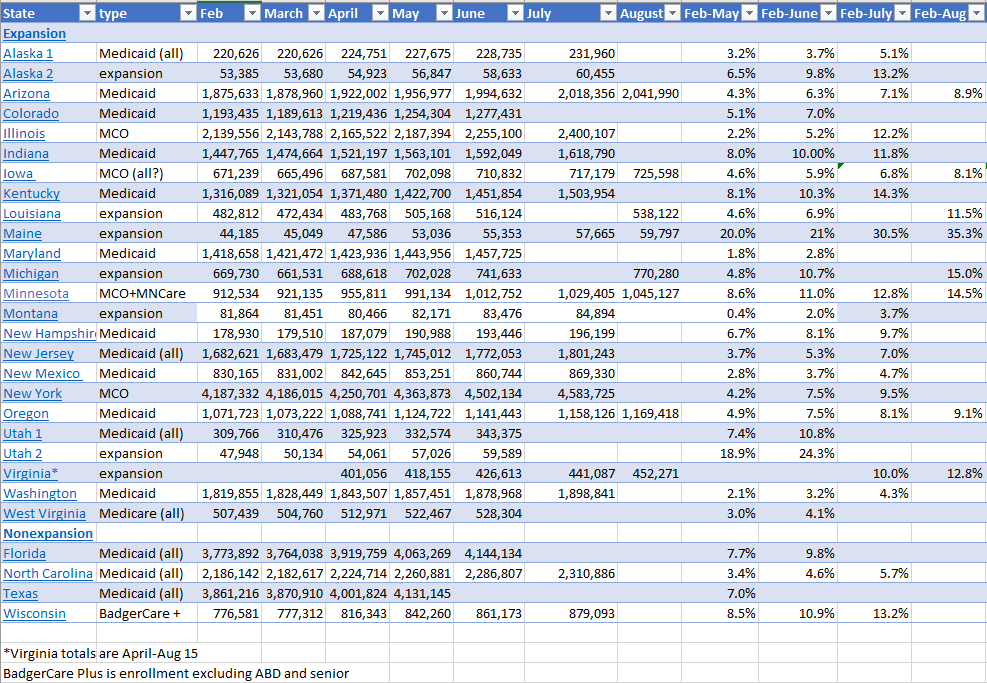
You could read these results as a paean to the ACA Medicaid expansion (which Republicans almost repealed in 2017). In states that have expanded Medicaid, Urban found that the uninsured rate actually dropped two percentage points for people with incomes below 138% FPL, the Medicaid eligibility threshold. According to CMS, total Medicaid enrollment (including children) increased by 11 million -- 15.6% -- from February 2020 to March 2021. Enrollment among adults rendered eligible by the expansion increased by about double that rate.
Urban recorded a much more modest and ambiguous impact for the ACA marketplace -- though the huge enrollment surge during the emergency Special Enrollment Period open from February 15 through August 15 of this year, turbo-charged by subsidy increases enacted in the American Rescue Plan, which appeared on HealthCare.gov on April, was mainly missed by Urban's study period. I'll return to that in a bit.
I speculated in May that the U.S. uninsurance rate might be at an all-time low, powered by huge gains in Medicaid enrollment, significant gains in marketplace enrollment, and relatively modest losses in employer-sponsored insurance during the pandemic. My methods (and math) are far less sophisticated than Urban's, and this is not to question their results (no source ever has a really complete picture of insurance in the U.S.). That said, a few comments and caveats below.